When I listen to this album, I feel drawn into a vortex of cathartically acrid storms. It’s as if I am being inexorably impelled to enter a great abyss, where I will tumble through piercing darkness for 28 minutes. As I emerge, I exit into a serene, almost confoundingly so, transition space occupied by the touchingly beautiful closing track “If I could.” It is a wild ride that I am always as excited to embark on as I was during my first listen.
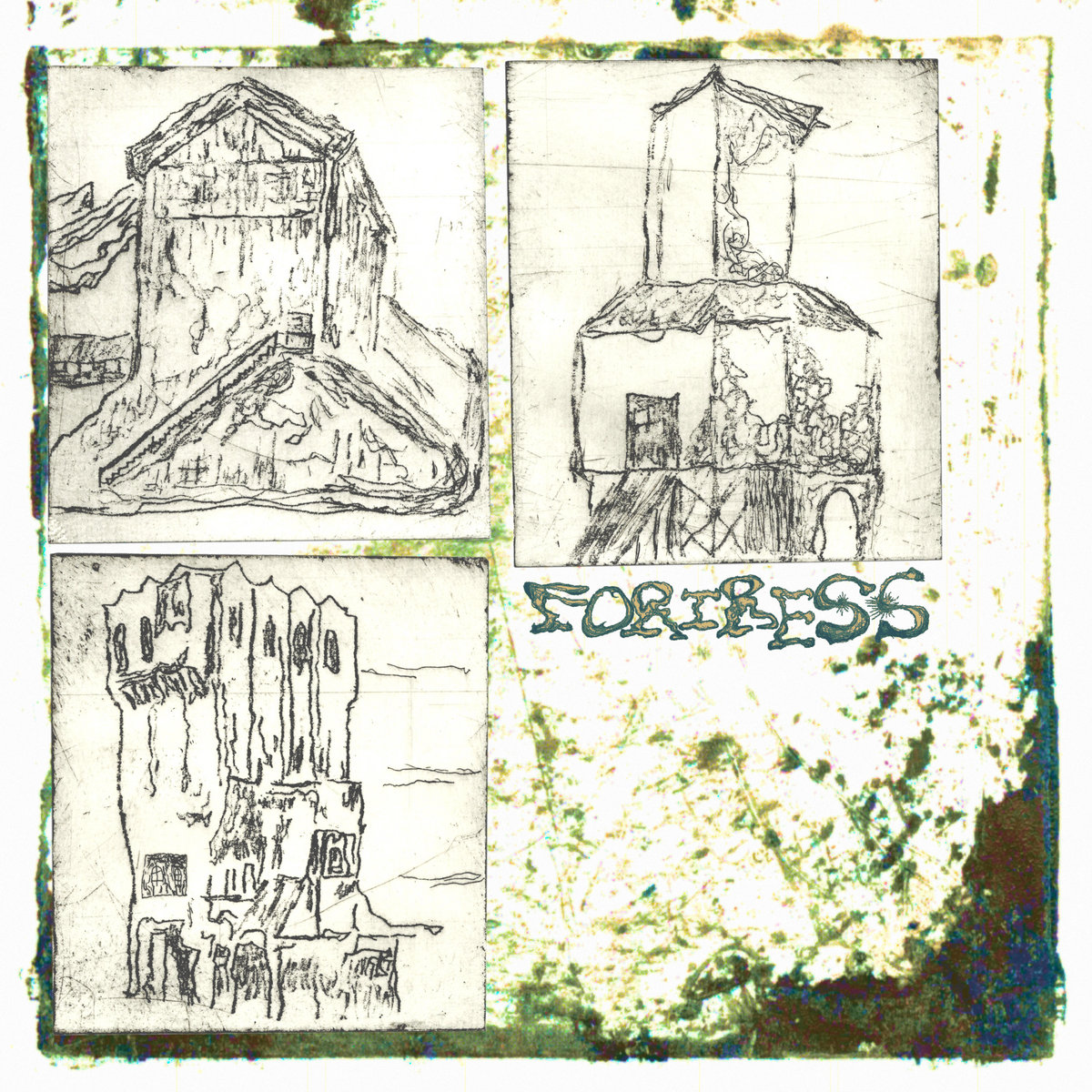
So many albums this year have found their way deep inside my subconscious, plumbing the depths with their exhilarating riffs and unforgettable vocal passages. This phenomenon is all the more special when the album in question comes from a band new not only to me, but to the scene generally. Such is the case with Fortress, who released their debut album Who Will Dress Our Soldiers just this month, December 5th. As I have delved deeper into the incredibly exciting world of new, noisy bands, I have exponentially discovered more and more. Such is the case with Fortress, who hail from New York, as I first learned of the band after they were readily recommended by other bands I follow, many of who they will share a stage with at the insanely exciting Post-Everything Fest that is kicking off early next year.
By the time I finished my third listen the same day, I knew I would be hearing this album on the radio of my mind for a while. And that has very much been what has happened; all six tracks Fortress grace us with on the album are absolute bangers. Particular favorites are “Flood” and “Brought in the Mud.” Specifically, I want to highlight this one fantastic portion of the latter track:
This is likely my favorite passage on the entire record. There is such a sense of almost hypnotic dreamscape in the way Max and Cadence trade lines in this song. It feels almost as if they are weaving together an intricate, beautiful spell: perhaps one not altogether not sinister. It is reminiscent of an ancient ritual, originating from a time of imprecise past, imbued with great force for the purpose of summoning not quite known. The very title itself, “Brought in the Mud,” is evocative of visceral entrance, of terrain-changing shift. Whatever is wrought here, it brought with it the mud. And it is that mud that buries me, and seems to permeate me to my very core.
All in all, this is a fantastic album that has more than earned Fortress a lifelong fan in me. I cannot wait to be a witness to the future heights I am sure this band will ascend.
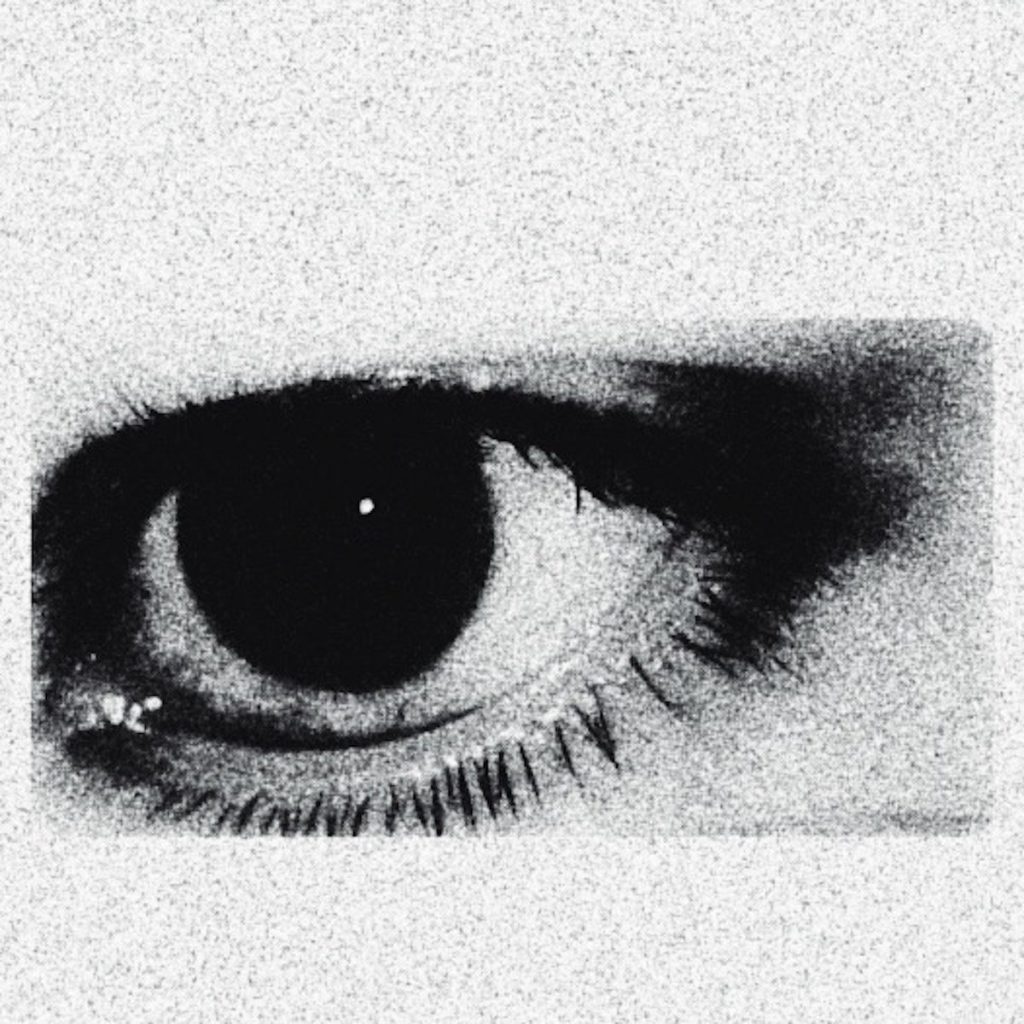
This is an immensely punishing album. One song. Just over one hour of length. It is a raucous, meandering journey of cavernous depths and harrowing heights. Throughout this review, I will allude to various points in the album simply by timestamp (0:00:00, hour:minute:second), but I think it is important to emphasize that part of the “charm” (if such a word could ever be feasibly applied to this album) is in the way Motherfucker… melts into one furious storm that is exceedingly difficult to break into sections. To listen to this Shearling record, is to submit oneself to a musical experience that is as challenging as it is rewarding. The sense of accomplishment that comes with every full listen is powerful, if only because of the obvious emotional weight imbued in the project. It feels as if it’s a project that required sacrifice of mind, body, spirit? Certainly sanity. I find this perhaps most poignantly embodied at 57:30. when we are confronted with this high pitched whine and Alex Kent singing in a cracking, terrified voice:
I need to know now I need to know, right this instant, now What’s gonna happen to the horses?
It is an eerie and shockingly raw performance: one of many such moments on the record.
One of my favorite passages on the album is the final few minutes, a moment of ostensible respite that then morphs into what sounds like a plane hurtling uncontrollably towards a fiery end in the background. It reminds me almost of GY!BE. The very last minute is punctuated by haggard screaming. It is a memorable end, to the say the absolute least.
I start with the end of Motherfucker… because it is a more true representation of a singular journey into the pit of hell than perhaps any album I have ever heard; naturally, with such a piercingly monstrous descent, there is an omnipresent sense of this inexorable end that permeates the entire song. On my first listen, I was struck by the many layers that alternately consume, and relinquish, to each other. It felt as if I was strapped to a bobsled, sliding down the gullet of an endless serpent: specifically, Lucifer. For the biblical themes run deep in this project, most exemplified in the constant allusions to Adam and Eve. All of this contributes to the hellish sensation of listening, especially when you don’t know the ending, or if there even is one. Maybe it goes forever? A never-ending nightmare?
And yet, there is an end. And it is an end I think forward towards with each listen. As if every listen is a conscious choice to activate a ride that ends in death, a la Ride the Cyclone. Along the ride, there are twists, and turns, but also fiery explosions and ensnaring wastelands. Throughout it all, as so powerfully demonstrated by the end, there is an overwhelming sensation of emotional turbulence: one that is as varied as it is charged. There are notes of rage, frustration, menace, and grief, to name just a few.
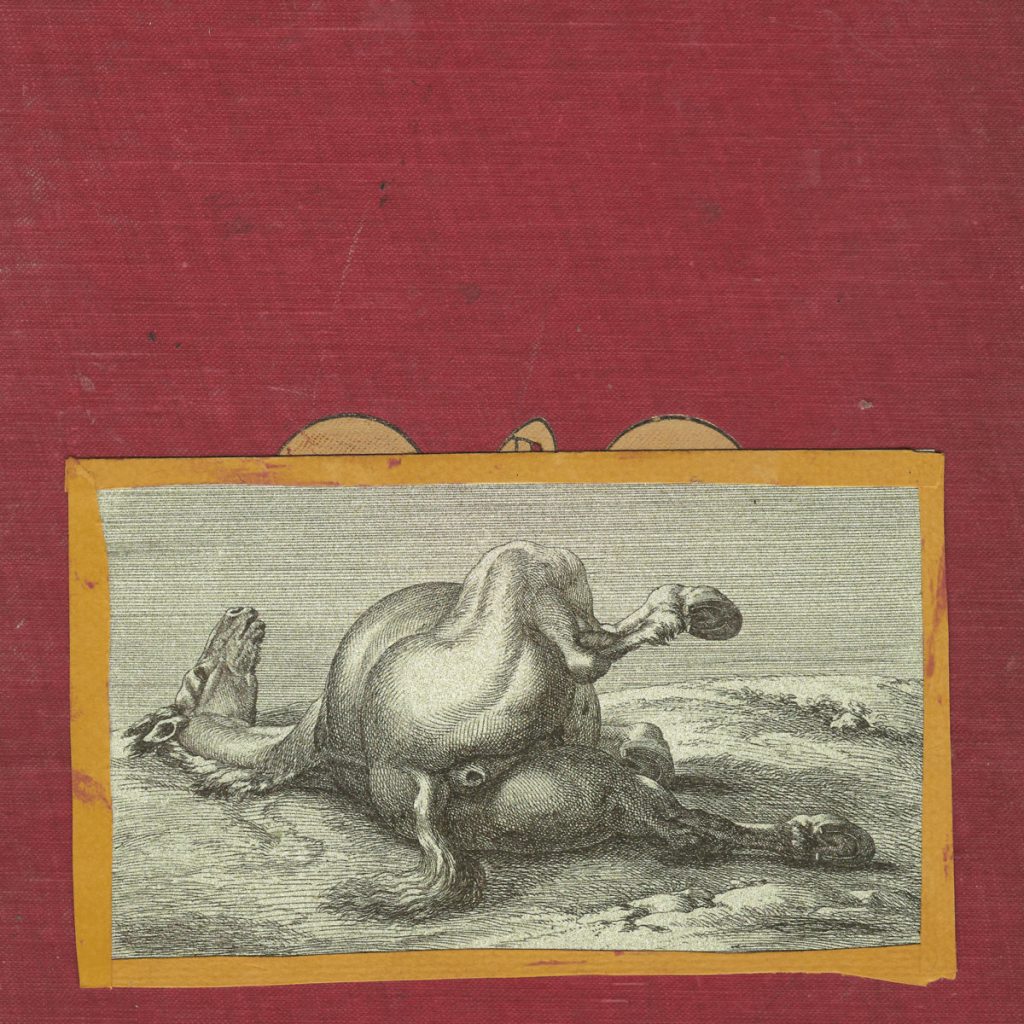
I see Motherfucker… as a massive painting. It is one image, simultaneously of a horse on its side, and of a cataclysmic hurricane. You zoom in on any sole point, and you will find a specific whine of a guitar, a rattle of a cowbell. The album is composed of seemingly endless individual brushstrokes like these, each with their own personality. When you zoom back out, you see the terrifying magnitude of the full musical maelstrom. But the act of listening is, albeit paradoxically, not only manageable, but invigorating. With each subsequent play, I am more fully aware of the entire picture, and my anticipation for specific moments is all the more heightened.
For instance, one of the highlights of the album for me is this one section less than a minute that opens with a hypnotic cowbell, its rhythmic knocking seemingly piercing my utter being with its unavoidable resonance, only to merge into roaring guitar riff that keeps repeating like a machine booting up that will swallow me whole. It is ended off by the faintest, most delicate keys of maybe the album. I look forward to this part every single time I listen, along with many other, similarly majestic moments.
Such is the essence of the timeless beauty I see in Motherfucker, I am Both: “Amen” and “Hallelujah”…: it is an album that pushes what it means to create a cohesive musical experience to some of the greatest extents I have ever witnessed.
This is not an easy listen, but I think it is not only one of the most rewarding of 2025, but of the album as a medium itself.
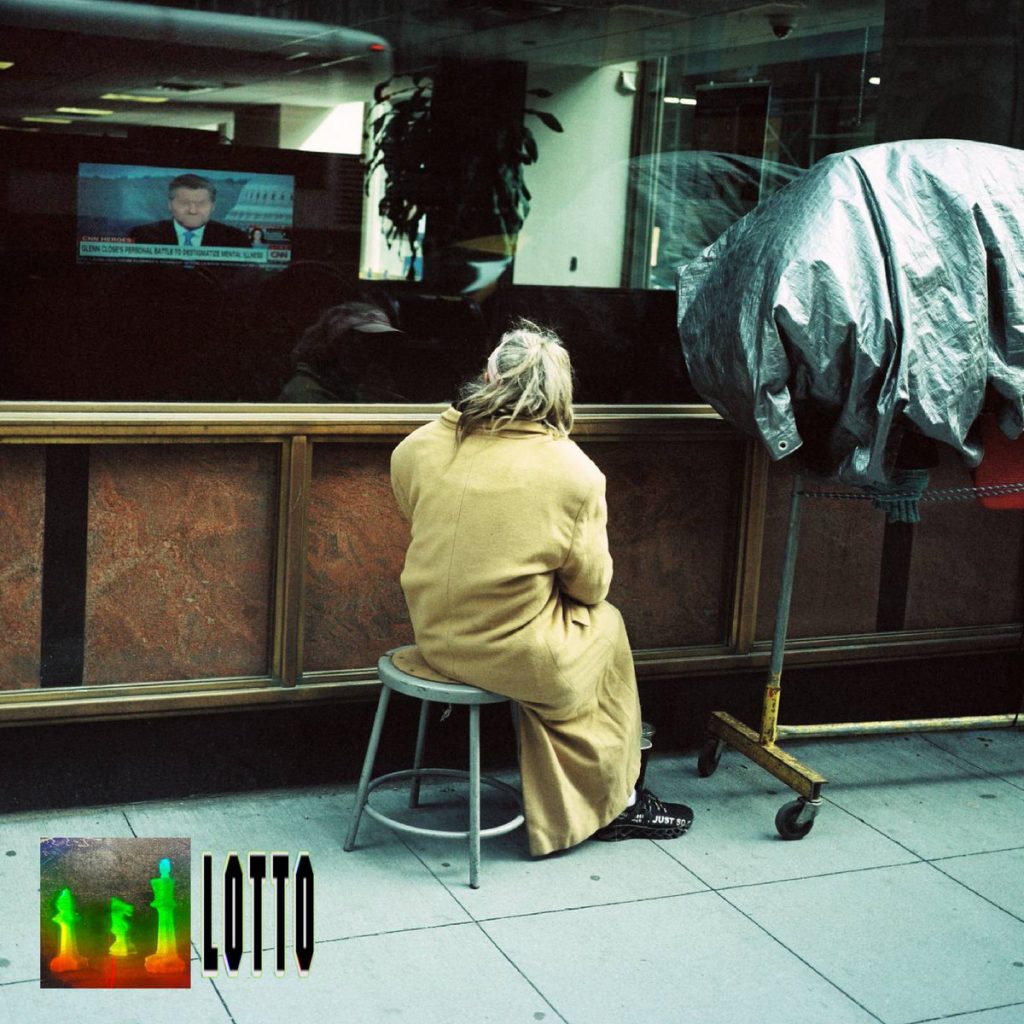
Listening to LOTTO is a heavenly immersive experience. When I listen to this album, I feel as if I am wading into an infinite pool in an ancient cave, lit by naught but a scant shaft of moonlight peering in through a slim skylight of indiscernible origin. There is no thought to where, why, or even who. My mind is filled instead with lush instrumentation that softly envelops my ever fold. There is no beginning nor end, but rather simple, earnest being. Each strum, each beat, each and every moment, in of itself, strikes a remarkable balance of isolated significance, and yet, seamless entwinement.
In other words, LOTTO has that special sauce where it effortlessly embodies cohesion without sacrificing the ability of any song, hell any mere moment, to dazzle in its own right.
The effect of all this is a listening experience that is otherworldly in a way few other albums achieve: one characterized by immensity, and subtlety. It is an experience that makes me feel as if I am vividly reliving a flashback to a memory I both never had before, and am just now living. As if the intensity of the sensations washing over me is strong enough to reach through time and space itself. It’s a pretty sick record.
I really enjoyed SENTRIES’ debut album last year, Snow as a Metaphor for Death. I was awestruck by the elaborate layers of instrumentation Kim Elliot crafted on that LP: the builds he centered tracks around felt impossibly intricate. Even more impressive is the fact that it is just him. As his bandcamp states:
sentries are: kim elliot that’s it just one guy
Many artists I like are solo acts, but SENTRIES feels notable to me for the remarkable fullness with which he imbues his work. There seems to be a maximalist quality to his approach that keeps me on edge in the best possible way; my ears feel as if they may drown among all the interesting sounds, all of which are simultaneously more than deserving of my focus.
All of these qualities of Kim’s music, which had me so enamored with his debut album, are ratcheted up several notches on this sophomore LP. In ever sense, Kim’s talents have matured like a fine cheese or wine or meme. What’s more, they have done so to a remarkable degree considering there is only a year’s time between these two records.
I have much more I could say, but I will leave this review with the simple urge to go listen for yourself. I was very, very quickly hooked, and I have a feeling it will be similar for those who are destined to be hooked by the sweet, demolishing sounds of SENTRIES.
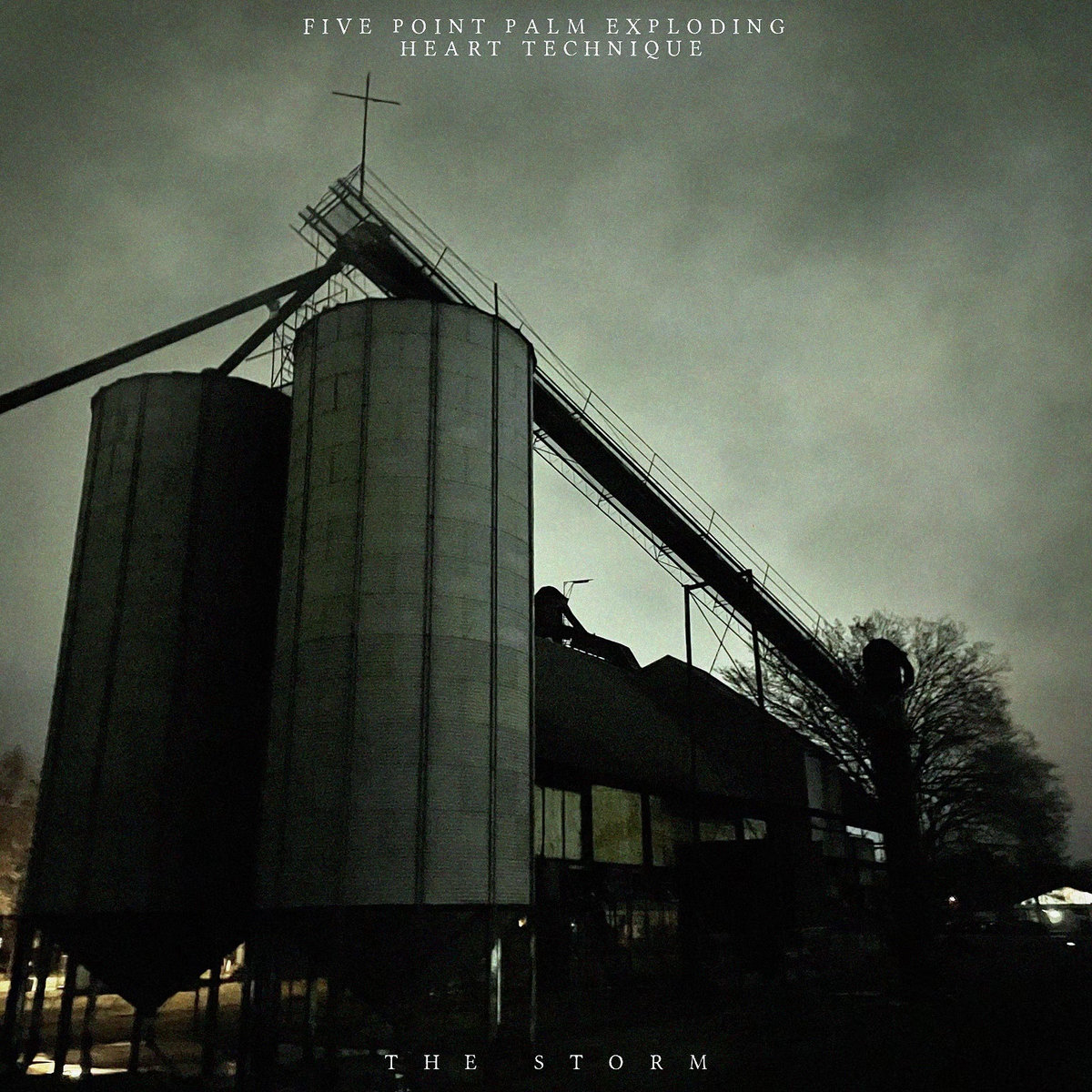
This is a winding, deeply rich album. In a year with quite a few debut (or at least first official) albums making my top 50, I found this one especially impressive considering its immense length and even more immense boldness in the sounds they fill that length with. Sitting at 53 minutes, this album is one of varying moods and sonic expressions. This is most clearly represented in songs such as “Nothing’s Easier” and “Leviathan, Pt. 1.” Both tracks stand at over ten minutes in length, and feature a near dizzying array of vibe shifts. I will focus on “Nothing’s Easier” for this review because that is likely my favorite track on the record.
“Nothing’s Easier” begins with a plucky guitar intro that is downright pleasant, which then shifts into a more electrifying series of riffs, before turning to a mixture of the two along with the introduction of vocals. These vocals hypnotically alternate between a plaintive singing style and a gruff yelling style. The alternating between these two serve to imbue the lyrics with dual moods that perfectly compliment each other, as if locked in a conversation. Moreover, the conversation feels singular in terms of participation. It is a conversation of the self, with the self, and demonstrative of a self on the brink greater emotional volatility.
Take the following passage from the beginning of the track
I feel ugly when I can’t dress in my clothes I’m incomplete and I pretend that no one knows Why am I scared to finally be happy again? I’ll be different, but I’ll always be your friend
To me, these lyrics showcase a simmering internal turmoil between the desire to live a life more truthful to one’s true sense of self. and the inherent difficulties, ranging from inconvenience to active danger, social annoyances to societal ostracization, that are are wrapped up within living that life of greater truth.
Interestingly, as the track progresses, there is a stark shift towards the more extreme of the two vocal deliveries. This follows the following lines, the last delivered in the initial, more mellifluous tone.
Sometimes I just feel like I’m just a man inside a dress I feel like I don’t fit. Who am I trying to impress?
It is on the very next pair of lines that the shift permanently settles in:
I know you’re lying to me every time you call me pretty But it makes me happy you might think that about me
I think this shift represents a heightening of this internal struggle as the narrator proceeds down the aforementioned path towards a life of more fulfilling self-expression. The narrator desires, and appreciates, gestures of acceptance, but is hesitant to allow themself to believe its authenticity. The subsequent chorus demonstrates the overwhelming nature of the narrator’s feelings, and how “nothing’s easier,” even if they are on a forward path.
Always back and forth, never linear Firing at all sides, everything surrounding I am nothing, empty shaking One thing is clear, nothing’s easier
However, although there is much that can be gleaned from the lyrics alone, I think the narrative strength of the track is actually, paradoxically, most palpable in the instrumental backhalf. Before explaining myself, let me give you the final pair of actually sung lines (coming up at just under the halfway mark of the track):
But until then I’ll stand by you And hope you love me the same
Following this, the track precedes down a beautiful, winding journey that feels almost as if it is the grand, climactic resolution of this conflict that is plaguing the narrator. There are numerous shifts, and the combination of the scope of this passage with the complete lack of any sort of explicit explanation allows for the blossoming of all manner of potential events in the mind of the listener. It simultaneously suggest to me that there is a satisfactory resolution, and that such resolution is impossible to know beforehand because to live a more truthful life inherently involves a degree of jumping into the unknown. I find it deeply comforting, as I tend to take a pretty positive interpretation from the track: one of faith in your community to accept you for who you are innately are immaterial of your physical self.
“Nothing’s Easier” is just one example of the carefully sculpted nature of Five Point’s tracks on The Storm, and I cannot emphasize enough how the rest of the album is every bit as majestic and intricate. I highly recommend this one.
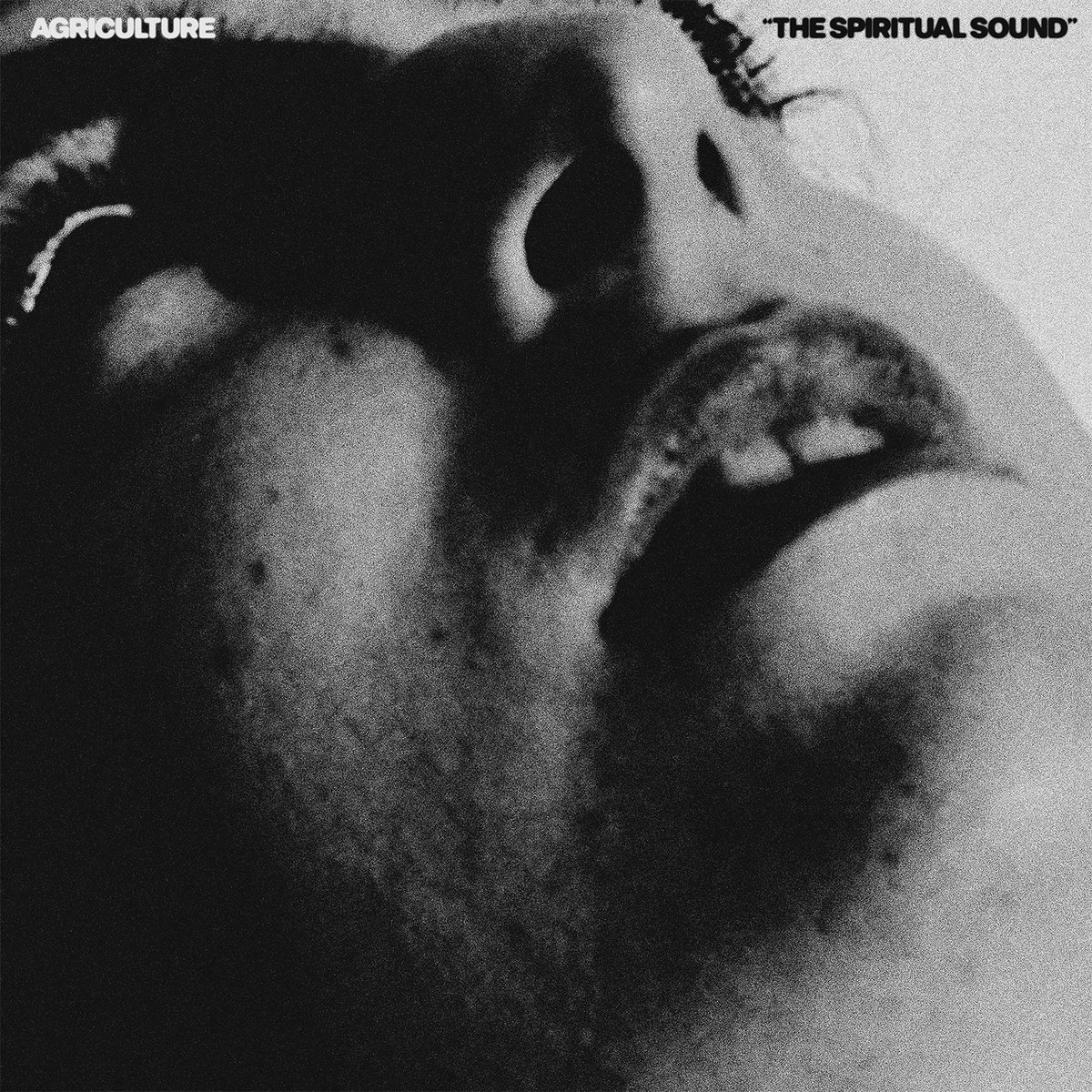
Agriculture is one of my favorite bands out there right now. They are constantly pushing what feels like the boundaries of genre itself. I cannot think of any way I would describe this album apart from their self-chosen label of “Ecstatic Black Metal.” Now, I love Black Metal. I also love a lot of music that touches on what Agriculture is doing, but the band is unique in the unmistakable flair they put in their music: that “Ecstatic” part. This manifests in a remarkably forceful flavor of exuberant optimism: one that is ostensibly buried under mass debris of anguish and trauma, but shines no less brilliantly. It is the very presence of the pain on this record that makes the hope so comfortingly cathartic.
Take “The Weight,” my favorite track from the record. This song can sound fucking brutal on its face. In its moments of force, it is blistering in every sonic sense. I would describe it as a thundering hammer raining down on my skull, but from the inside. The strength of these passages of onslaught is quite appropriate given the subject material:
“‘The Weight’ is part of a series of songs on the album that bears witness to queer life,” explains Levinson. “It was written reflecting on a particular month last year when so much seemed heightened. It seemed like many of my friends were being harassed in public—both verbally and physically—for being trans, for being queer, and/or for being women (it’s not always clear which). This was also a time when I was feeling a lot of love and a lot of community. I wanted this song and the songs around it to honestly reflect both these elements. I wanted to write about transness but didn’t want to rely on political aphorisms and indulgent images of suffering. I wanted to paint a holistic portrait of queer life.” 1
The seriousness of what Leah is discussing here is reflected in the lyrics:
Casey got beat While out with Tessa I heard days later When we reconvened And Suz was followed That same week And Casey and Tessa Still can’t sleep Hammer and screw Some guy yells “faggot” He drives off gnawing Flexing his cheeks
However, it is important to remember the full breadth of the experience she is aiming to imbue within this track: an experience that is as much defined by love and community as it is by greater likelihood of harassment and marginalization. In this holistic context, I believe the song is a smashing success. The song is immensely crushing, yes, but it is not one-note in the slightest. It is as much characterized by tender, intimate moments of subduedness as it is by epic, high-octane vigor. Furthermore, within these moments of vigor, there is also a rich variety of emotions evoked. Sometimes the noise comes across as bitterly venomous, sometimes it comes across as more vividly exuberant. A prime example of this distinction is apparent in my favorite moment on the track, the album, and really in all of the music I had the pleasure to hear this year:
When I listen to this portion of the track, I never fail to feel as if my very soul is being lifted from my mere, corporeal being. To specify the emotional flavor I associate with this feeling, let me emphasize that it is not one of distress, nor despair. Rather, it feels incredibly euphoric, ecstatic even. It is as if I am being freed from all trivial concerns of perception in the eyes of others, and am instead being foisted into the light of communal love and gathering. More than anything, it is heavy.
This idea of heaviness permeates the track throughout. It is present in the simultaneous presentation of weight as both negative and positive, inducing of both stress and catharsis. In this respect, the parallels with trans/queer life are abundantly clear. To be trans is to live life on hard mode, but also to live life on supercharged mode. The experience of being vilified daily, of having the validity of one’s own existence reduced to a political talking point, is quite obviously draining. Conversely, however, the inherent potential for connection among trans people is one that can be immensely uplifting. When people share such an immutable, and impactful, trait, one that is so inextricably tied to one’s own experience of living, both internally and externally, it can provide the conditions for more streamlined paths to community. This is particularly true when that community is under attack actively.
The end result of all this is a track that packs an incredibly impressive level of depth into just under six minutes. There are many moments on this track, and, truly, the entire album, that I would love nothing more than to put underneath a microscope and just expound upon my various interpretations: and to do so particularly with as much flowery language as I can muster in the face of the impossible pursuit of adequately conveying how they make me feel. Needless to say, I unfortunately cannot afford this album the analysis it so dearly deserves, at least not here, not now. Suffice to say, this is a breathtaking album in every sense of the word.
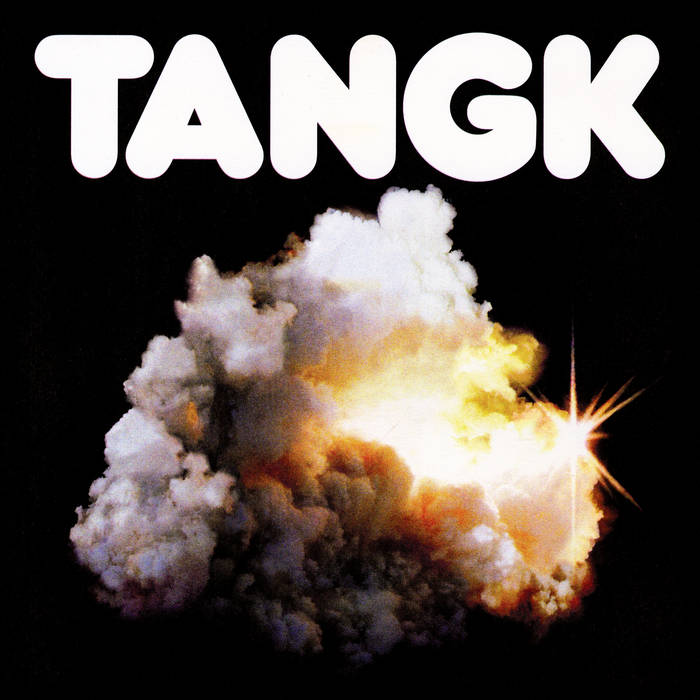
IDLES is an interesting band. They first exploded on the scene with some of the best and most driving energy to grace British punk with Brutalism and Joy as an Act of Resistance in 2017 and 18 respectively. Both are powerhouse albums that are as blistering as they are fucking fun. Joy was especially notable for the themes they incorporated in some of their tracks, particularly their highlighting of toxic masculinity and the way it fucked with their heads. It was immensely satisfying because I am all for angry punk music that takes a fat shit on the way gender essentialism can spurn meaningful emotional connections between fathers and sons, but also because it simply slapped. Now, since those two records, IDLES has not released a third stylistic sibling. Ultra Mono and CRAWLER were both good albums that I enjoyed personally myself, but were decidedly not the same sound as that which first catapulted them onto the scene. And I think if any IDLES fans go into TANGK hoping for a course correction away from the previous two and back to the first two, they will be disappointed because this latest drop feels markedly different from any of their past releases. But I am not one of those fans and I love the evolution the band has taken throughout the last few years and especially on this album.
While comparatively it has many more moments of subdued emotional charge, TANGK still brings the bangers “Gift Horse,” “Dancer,” and “Jungle.” But I will concede that the bangers are much more of a dance style rather than say the world ending crushing finality of “Rottweiler,” the closing track on Joy. It is a transition that the band lands with incredible finesse as they prove their ability to make a hell of an infectious track. There is no helping it, you just have to dance when you listen to “Dancer” as Joe Talbot explodes with “Dancers/ Hip to hip/ Dancing/ Cheek to cheek.” I do a little spin every time, as is law when listening to a song that LCD Soundsystem worked on.
Joe’s volatile vocal delivery is all the more captivating for the rich and janky instrumentation that frames it. It is especially clear on “Hall & Oates” where his verses are flavored with the whining screech of what feels like metal on a chalkboard. It adds a wrecking quality to his words that transitions smoothly into the bizarre storytelling of “Jungle,” which Talbot opens with descriptions of wild boars and a Scotman’s boot that then erupts before returning to a build and then continuing in this trend until a spectacular finish.
Another banger I must mention is the more intimate and touching “Grace,” which sees a driving drum beat set to a more crooning delivery from Talbot as he professes his desire for love above all else:
No god, no king I said love is the thing No crown, no ring I said love is the thing
Here he makes clear that he has no desire for religion, for power, for wealth, for anything but love. And he wants love alone, he needs no ring or other material expression of their love. It is the love itself and the warmth and grace it gives him that he longs for above all else, as evidenced while he goes on to supplicate his lover in a plea that seems near desperate:
Give me grace Give me light Hold me up as I take flight Make me safe Away from harm Please caress my swollen heart Make me pure
Though it is difficult for me to not just picture Danny Devito covered in hand sanitizer squirming on the floor when I think “make me pure,” I will say that this passage of the song is one of the most touching moments for me and indicative of the band’s ability to make a really gorgeous, though still perhaps slightly sinister love song. There is a weight behind Talbot’s words when he says “I’ll be your hands/ I’ll be your spine.” That’s a big commitment, spines put in work. But also, we know only the narrator’s flawed perception of this love and have no sense for how much his offer is welcomed. Hell it could all be internal and said to no one in particular, but rather a longing for someone to fill that role in his life in general. Regardless, the ambiguity of the lyrics gives an ethereal air that perfectly fits Talbot’s delicately soft delivery and its ostensible opposition to the inexorable stride of the song. The combination of all of these facets really make this track specifically a standout.
Ultimately, I probably still prefer Joy as an Act of Resistance – it is also the only IDLES album I have on vinyl – but I quite enjoy TANGK and think the comparison of the two records does the latter not enough credit as TANGK is a great album in its own right that is also just of a separate style entirely. There are many elements of similarity, the most obvious being Talbot’s gruff vocals, but TANGK seems more of an experimental meditation of an album as opposed to the more blunt, kickass nature of Joy. You can see this just in the final track “Monolith” and the opening track “IDEA 01,” both two of the quieter cuts on the project and a perfect pair as their flow perfectly loops the album back into itself with a sax flair. Fabulous album overall and certainly one that will make my end of year list.
This is an album of beautiful and soaring moments of ecstasy. So much to hone in on, so much to close your eyes and float on clouds to, so much to just smile and softly bop your head along with. Mica Tenenbaum and Matthew Lewin really deliver here on their sophomore lp as they construct a dazzling world that is just a joy to get lost in. It is always special when an album captures me so immediately and with such urgency upon release. I had already been obsessed with the singles—especially the delightfully labyrinthine “Tunnel Vision,” a song defined by a carefully measured buildup to a rapturously raucous release. But even having already heard the song many times, it hit even better in the context of the overall album. And the same can be said for every song as each one lifts each other up through their shared contribution to the overall entrancing mystique that the album washes itself in. The general elements of psychedelic meandering that permeate the album give a sense of drifting through a vast space. A space that feels as infinite in its journeyable lengths as it does paradoxically apt for highlighting the most compelling moments on the record, which almost seem to briefly materialize like brilliantly ephemeral celestial objects.
As much as the album feels to me to be inherently about a wondrous, serpentine journey through a constantly evolving soundscape of varying complexity and sensations, it is also about just fucking dancing. It is a trippy record for sure, one that is simply an absolute joy to lie down in bed and listen to on headphones, but it is just as much a record to get down to and groove. Whether the chorus on “Death & Romance,” the bridge in “Fear, Sex,” or the chorus in “The Ballad of Matt & Mica,” particularly: “Killing time every day/ Bang-bang, never ending.” Ugh. I also love moments like the start of “Vampire in the Corner” that compel me to walk around, holding my headphones, eyes closed, and swaying gently. And I just adore the moments of rapturous cataclysm like the instrumental breakdown in “Tunnel Vision” or the last third of “Killing Time,” where we get this vocal switch up as Mica offers a harrowing view of accelerating time:
I’m looking in the mirror and swallowing the key It only takes a minute to forget a week Count up all the years that we spend asleep If time is meant for living, why’s it killing me?
It gives me chills in a manner that is as ethereally enchanting as it is hauntingly expressive. With the way the song feels like it is being stretched to the point of breaking during this part, it really succeeds at hitting you with the petrifying magnitude of time and irrelevance we occupy in its passing. It only takes a minute to forget a week. One blink and years have passed.
Now this album is quite good at pulling you into another world, but it also excels at letting you build that world yourself. From the very start of the album, Mica primarily sculpts specific scenes and images with lyrics that have meaning to her, but are ambiguous enough to have completely different meaning for the listener. Mica expounded on this during a reddit AMA on r/indieheads:
The lyrics mean something specific to me, but intentionally things are left a little open ended because it’s cool when people can draw their own interpretation and meaning from the words. I mean sometimes the intention of the lyrics is more concrete/straightforward but other times they really are a sort of subconscious flow and dreamlike. And it’s not until later that I figure out what they mean (to me), and that’s always a cool process of discovery. Maybe it’s the same for our listeners?
For me at least, I can confirm it is the same. My first listen to Imaginal Disk did not present me with a clear defined meaning or story. Instrumentally, I was enraptured by the rich variety of sounds that they managed to consistently deliver in tracks that were as cohesive as they were unique. Lyrically, I mostly got general elements of love, self-conflict, and evolution. As I have continued to listen to Imaginal Disk, my thinking on the album has changed. Both from the knowledge of new context in terms of the album’s lore, but also as I have considered the songs more and what I take from them. And it has been a cool process of discovery as I have naturally honed in on several songs as particularly meaningful in a way entirely separate from the album. Songs like “Cry for Me” are both sonically mesmerizing and lyrically open ended enough to make fitting frames for the listener’s own experiences. At the same time, as Mica said, they do employ more concrete/straightforward lyrics as well, such as on “Image.” The breadth of this spectrum of narrative overtness is exemplified in the first three songs: “She Looked Like Me!,” “Killing Time,” and “True Blue Interlude.”
Starting with the opener, “She Looked Like Me!” starts off with a low whirring and then a quick, ghostly “Hello” before we get a beat decorated with bizarre background sounds of distorted cheers, hoots, and chattering? Exactly what you are listening to is difficult to place, but its Carrollesque nature perfectly frames Mica’s floating vocals. You can close your eyes and imagine her words animated as creeping aural tendrils lazily reaching out to form the edges of an invisible frame, all while carrying with them a hazy picture slowly coming into focus:
Down the line, over the waves Two kids and a military Turn their tongue, change their name La love, born to marry Crossed their hearts, crossing the earth One year, then a baby’s carried Grows up young, screams at graves Bang-bang and it’s customary Ordinary
The way Mica just waits a beat between “customary” and “ordinary” really emphasizes the latter in a way that seems to highlight the ethereal magic that can exist just as much in the ordinary as the fantastic. Which ties into what I see as the story of two young lovers leaving their home to look for something better. They change names, learn a new language, marry, have a kid, and live a customary life. An ordinary life. A life that has been lived countless times before and will be lived in the future. But maybe also one of hardship or even death considering the ominous line “Grows up young, screams at graves.” It is also worthwhile to note that this passage is also likely referring in some part to Mica’s family herself since she is originally from Argentina and moved to Miami with her parents when she was 1.
The track truly hits its climactic crescendo during the third verse when Mica gets into this cryptic description of meeting an alternate version of herself: “I didn’t know her when she walked in/ But I recognized her eyes.” The depiction is intensely dreamlike and clearly loaded with personal meaning in a way that is quite intimate and powerful. The verse then violently explodes when Mica describes how this other version of her “…shot at me like an earthbound bullet/ And then she wrapped her hands around my neck and I felt love.” And specifically that last half of the second line is one of the best deliveries of any line on the whole album as everything seems to melt away on the word “love” in what can only be described as an utterly intoxicating transition into the verse’s close:
Just ordinary love Let me hold you in my arms Oh, love, that old familiar drug
It simply gives me shivers, especially on that last line. But as gorgeous a moment it is, Magdalena Bay are giving us a forebodingly aggressive depiction of love here as it comes right off Mica being attacked by an alternate version of herself. Since the album focuses so heavily on self-improvement—often through fantastical, unreal means—this self-attack can be seen perhaps as a violent instantiation of self-denigration born from an unhealthy obsession with perfectionism. A toxic warping of self-love. In that same vein, this other Mica’s attack represents a personification of the inherently dystopian nature of the Imaginal Disk procedure itself, a recurring topic on the album that is more explicitly explored on the third and fourth tracks.
Going into the second track, “Killing Time,” we are greeted by what is ostensibly a refreshing respite from the unsettling nature of the opener. The opener ended on the theme of America stealing Mica’s fate and her being choked, albeit supposedly lovingly, by a mysterious doppelganger. In contrast, “Killing Time” begins with Mica singing about the passing of time in a general sense as she draws upon the age-old tactics of counting sheep and watching the clouds. Activities that are often looked at with, if not fondness, at least a lack of underlying menace. But Mica’s choice to focus on “killing time” specifically hints toward the more disconcerting evolution of the song. Whereas the initial lyrics dwell on lazily passing time lying on a grass hill looking at clouds in the sky or counting imaginary sheep in a comfy bed, it all melts away as the song progresses to a much more unsettling view of time as something to fear in its breakneck swallowing of any tangible sense of meaning. Years pass in a dreamlike haze and instead of killing time, time is killing Mica. And the implication is that she will continue to kill time and it will continue to kill her as long as she delays living the most idealized possible version of her life, a version that is unlockable through the Imaginal Disk procedure.
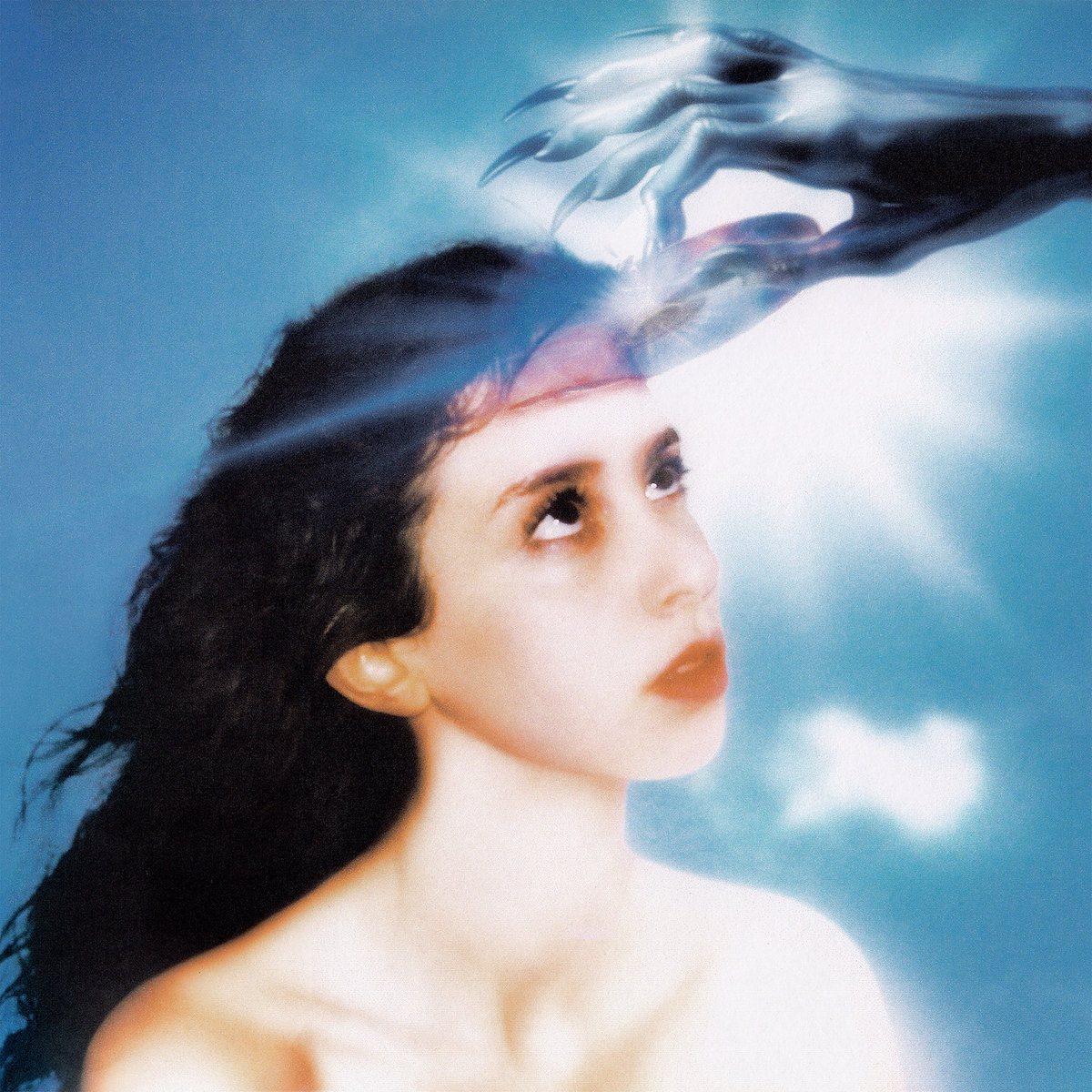
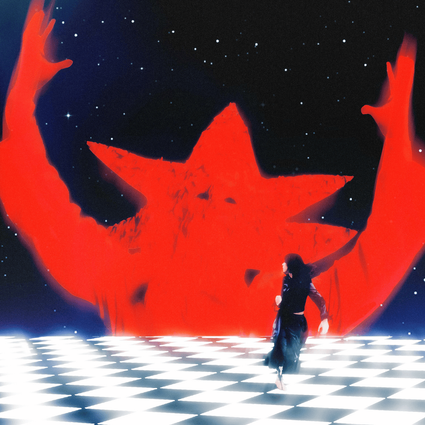
It is on “True Blue Interlude,” an in-universe ad for the Imaginal Disk procedure, that we first explicitly get a hint of the lore that envelops the record. As much as Magdalena Bay like to dabble in lyrics that offer a multitude of meanings based on the listener, they also offer an enigmatic story of their own throughout the album that revolves around the mysterious Imaginal Disk procedure, the foreboding presence of “The Doctor,” and the mysterious characters “True” and “Ghost.” The Doctor specifically is a person in all red robes with a giant star-shaped red headdress outfitted only with narrow slits for eyes. They appear on the single cover for “Image” as a massive being taking up the horizon while Mica runs away on a checkerboard floor. They are the one who performs the Imaginal Disk procedure, as showcased in the music videos for “Image” and “Death & Romance.” The procedure is not explained in any kind of thorough sense, but the core of the procedure is depicted on the cover of the album itself as an inhuman hand inserting a shining disk into Mica’s head. We see The Doctor insert a similar disk into her head in the music video for “Death & Romance.” It is also interesting to note that imaginal discs (with a c) are an actual thing in real life and are specifically a part of insect larvae that then evolves into a full grown body part during pupal transformation. A real-life physical self-evolution to compliment the mental self-evolution of Magdalena Bay’s fictional version.
The Doctor – Single Cover for “Image”
Though the procedure itself is not explained in any detail, “True Blue Interlude” offers a dreamily convenient picture of the procedure that hearkens to the innumerable drug ads that have proliferated across American TVs for decades. There is a soothing beginning as the first moments of the song open with tranquil background voices almost whispering “(true blue, true blue)/ (true blue, true blue)” before the narration kicks in and the ad introduces the listener to their future improved self: “Say hello, it’s you, the purest you/ The next stage, the next phase is here.” We keep getting these repeated chime-ins of “true blue” throughout the track as the ad insists that you will still remain “you” after the “divine digits” insert the disk and “the nightmare lifts.” The overall effect of the song is both captivating and effective in giving an accurate sense of the source material it is pulling from; it is even complete with a portion in the middle with dramatically sped up lyrics akin to the obligatory drug commercial speed reading of possible side effects.
The run of these first three songs introduces core concepts of the album in terms of self-improvement and evolution and explores them in the realm of the fantastical as much as in that of reality: there is as much an exploration of inward discovery in a therapeutic sense as there is in a science fiction sense. The differing degrees each of these three tracks adheres to one of these realms is representative of the album as a whole since they occupy the extremes and middle of a spectrum. On one end, “True Blue Interlude” basically necessitates being read in a literal, outlandish manner since it is a straightforward ad for a fake procedure. Whereas on the other, “Killing Time” is much more of an open ended, pondering song about the dilemma of time’s inexorably constant death and all that it consumes in its destruction. Sure, “Killing Time” can also be thought of in terms of the specific story of Mica’s character and her consideration of undergoing the Imaginal Disk procedure, but its ambiguity and lack of explicit imagery ultimately make it an apt vehicle for a much greater range of potential meanings for the listener than “True Blue Interlude.” In the stylistic middle of these two songs sits “She Looked Like Me!” It includes more illustrative imagery than “Killing Time,” particularly Mica’s doppelganger attack, but it is also still opaque enough to be varyingly interpretable.
Along with the rich imagery on the album itself, Magdalena Bay also provide a bizarre companion website that offers some additional context to their lore. It consists of a map with clickable locations such as the “Installation Center,” “True’s House,” and “The Outskirts.” Each of these locations offers additional pathways, all that end at more strange imagery. Take, for instance, the weird clickable pillar complete with a glowing red orb that is labeled: “D-Ejected HQ.” When you click it, you get a close up of the same pillar on a grassy hill with impossibly quick clouds moving in the background. Clicking the pillar again leads to a dark room with two red doors on the left and right with glowing silhouettes dancing in the middle. This room is known as “main-dance-room” and clicking the door on the right leads to “bug-room” where a mantis smokes weed out of a bong. The same dancing figures and mantis are also in the music video for “That’s My Floor.”
The official lore of this album can be explored much more than the brief attention I gave it in this review, but I wanted to give just enough of a taste to show how rich it is. The great thing about this album is that all of that lore can also be completely disregarded for the purposes of your own interpretations and to stunning effect. I had my own ideas entirely when I first listened to Imaginal Disk and definitely was not imagining the nightmarish figure of “The Doctor.” Yet I found it a deeply moving record in my own way and one I was still readily able to infer my own emotional meanings from. Regardless of the context you have going in, Imaginal Disk offers a wealth of equivocal imagery beholden to no sole interpretation, which is clearly the intention of the band as seen in Mica’s ama reply. It is also one of the album’s greatest strengths since it makes the album a particularly intimate listen in multiple respects. As much as it can be understood through the lens of Mica’s personal journey of innermost discovery, Imaginal Disk simultaneously serves as an ideal backdrop for us to impart our own experiential ruminations on as it skillfully dabbles in a variety of themes without pigeonholing any of them. With that being said, I think overall the album can be pretty succinctly summed up by a specific video found on the companion website within “true’s-living-room” of a CD being spun on a vacuum motor until it explodes. Anyway, amazing album.
This album is beautiful; it is passionate, it is heavy, it is earnest. I have waited a long time for Pain to Power. Over the last few years of monumental EP after monumental EP, the hype for this eventual full album debut grew inexorably within. With every single released in the rollout, my excitement exploded evermore. No song electrified my teeming anticipation more than “They Look Down On Us,” a gargantuan ten minute epic of a track that fills me with such swells of emotion, it feels as if I cannot help but be swept up by a massive, and growing, wave of frenetic, revolutionary fervor.
Maruja have an incredible knack for imbuing their music with a deep, compelling call to arms. In the case of “They Look Down On Us,” this call is abundantly clear lyrically, what with its emphasis on the brutality of late-stage capitalism and the importance of communal power, but this call is just as vibrant instrumentally. The first half of the track can best be described as a withering storm: the second half, lachrymose catharsis. In this way, Maruja whip up the listener into a righteous fury, and then provide a productive path to redirect that energy towards. It is, all at once, mournful, optimistic, pained, joyful, passionate, and committed to the central cause they put forward: the cause of the people, by the people, for the people, to secure the future of the people. It is a truly invigorating song, to say the least.
Fortunately, as I sit here on release day, several spins in, I can confidently say that the same gravitas that made the singles so special is also present on the rest of the tracklist. In fact, the singles themselves are even better in the full context of the album as a single narrative project. Maruja have really crafted an instant classic, straight from their souls to ours.
Sometimes, an album simply “has it,” where “it” is an intangible, but obvious spiritedness. These are the records that I find best exemplify my rich love for the album itself as a medium. They are the albums that sincerely have something to say, and the talent to say it. Maruja’s Pain to Power undeniably has it. This was to be suspected after one of the best single rollouts I have ever had the pleasure to witness, but it is welcomingly confirmed now that we have the ability to assess their long-awaited creative offering in its totality.
One aspect of Pain to Power that I particularly enjoy is the crushing moments Maruja frequently graces us with. Prominently, this is first seen in the first moments of the first song, “Bloodsport.” Other memorable moments include towards the end of “Born to Die” (7:30 – 8:35), the end of “Break the Tension” (3:10 – end), and the eruptive chorus of “Trenches.” These veritable explosions of noise serve not as bludgeoning blows, but as mustering moments of urgency. Without fail, they make the hair on my nape stand at attention and my mind’s slate wipe clean, totally refocused on what I am listening to. When these moments occur at the end of a patiently frenzied buildup of energetic tension, as they do frequently, this effect is only all the more heightened.
To continue on the topic of masterful buildups, I cannot express enough how pleased I was to discover two more lengthy tracks in addition to the single “They Look Down On Us” (“Born to Die” and “Reconcile” specifically). All three tracks are just about ten minutes, and all three tracks serve key roles in the flow of the album. They all have clearly distinct inflection points that give each one its own unique journey. The placement of these three within the tracklist serves to further amplify their respective effects on the album’s tempo.
Beginning with the first of the three, “Look Down On Us” establishes a flavor palette for the remainder of the album: politically, lyrically, emotionally, and compositionally. Furthermore, it opens with an aggression that perfectly carries the momentum of the volatile opener “Bloodsport,” and ends in a beautifully soaring fashion that seamlessly segues into the most tender cut on the album: “Saoirse.”
This then leads into the second lengthy track, “Born to Die,” which slowly, purposefully opens with a pair of verses that aim to inquisitively identify and name the societal restrictions which we labor under:
This culture wanna limit us And capitalise our output Limit our potential I know what this life is worth We are universal spirits And our kingdom is this earth All those years of holding back It’s only you you do not serve Mindful of our differences Respect wants holding down Most already know this But they’re afraid to make a sound
So herein lies the problem with the many and not the few Always passing out the blame instead of honesty and truth This life is temporary, why you holding onto youth? Possessions weigh you down, you can’t let go of what is new Communication inspires hope, humility controls your pride Thеre’s no need to wear disguises Our spеcies overcomes through perseverance in the mind Our dreams are a reminder this realm ain’t the only kind This realm ain’t what you define, no answers, running blind Like a dog caught in the headlights of a truck that’s passing by Care less about what survives, only got ourselves in mind Ain’t it terribly ironic how we’re all just born to die?
From this initial portion, the song embarks on a steadfast instrumental incline that eventually culminates in a gorgeously cathartic cascade. From here, Maruja maintains the energy with two of the most blistering tracks on the album: “Break the Tension” and “Trenches.” The meditative instrumentals of “Zaytoun” then serve as a bridge to the third monster track, and the closer, “Reconcile.” Following the trend in the previous two tracks (of high energy to low, or vice-versa, such that they compliment the directly surrounding songs), Reconcile matches “Zaytoun” by starting with a complimentarily gentle introduction that proceeds to slowly grow into a forceful close that brilliantly transitions back into the turbulent opener.
“Reconcile” also, importantly, acts as an ultimate, cathartic release of the tension that Maruja steadily builds throughout Pain to Power. It does so by resolutely remaining focused on the crucial necessity for love. Maruja incorporate a lot of pain on this album, but all with the goal of inspiring the shifts that are needed, small and large, to rectify all this trauma that plagues us as it begets only further suffering. There is much societal healing that must happen, and it will only happen if we fight with love in our hearts and minds: if we show sympathy in our words, our actions, and our desires. This is not easy; there is no switch to flip. It requires changing minds and inspiring spirits. It must overcome fear, and find strength in community. This is why the outro enthrallingly consists of two simple directives that Maruja ardently bestows upon us: “Have no fear” and “Pray for love.”
Ultimately, Maruja is a band with an agenda. Their music is crafted to help, in what way they can, move us all closer to a place beyond the suffering of the present, beyond the current crisis of rife apathy. In this noble aim, I think they are one of the most successful bands out there now. Music is a powerful force, and Maruja is very much aware of their capacity to harness it. They say as much on “Reconcile,” in one of my of favorite moments on the album:
Music lifts our spirit and love uplifts our souls Ancient language healing, so let the music take control
Maruja’s committed understanding of the role they wish to play as a band is also born out of the very progression of the band itself. Through its many years together, Maruja’s music has become much more political, forceful, and purposeful as they have themselves lived through the changing world and subsequent multitude of emergent crises. Now, as a band fully realized, ideologically and musically, Maruja officially storm onto the scene with a deafening thunder.